Roof-to-Fence Blinds · Perth Guide

Roof-to-Fence Blinds in Perth: How to Close the Gap and Actually Use Your Alfresco

Close the gap from your roof or patio down to the fence, and turn a part-time alfresco into a room you use almost every day.

By One Stop Outdoor Blinds · Updated July 2026 · 6 min read

Close the gap

Seal the open side between your roof line and the boundary fence in one continuous run.

Tame the sea breeze

Side-retention tracks hold the blind firm when the Fremantle Doctor picks up in the afternoon.

Block the low sun

Stop the low western sun and glare that a solid roof simply cannot reach by mid-afternoon.

Add privacy

Screen the alfresco from the street or the neighbours while you still see out.

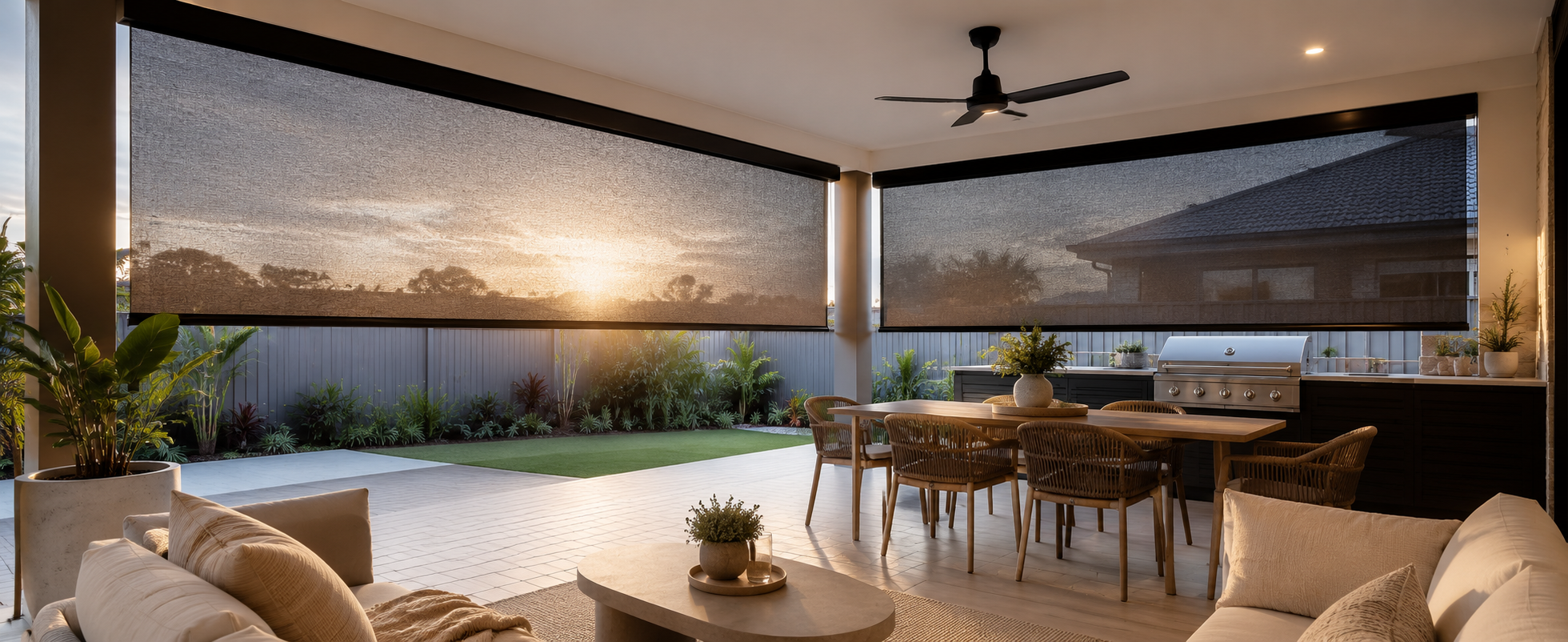
If you have a patio, verandah, pergola or even the back of the house with a solid roof but open sides, you already know the problem. The roof keeps the rain off the top, yet the space is still unusable when it matters most. The low afternoon sun streams in under the eave, the sea breeze picks up around three o’clock, and a sudden squall blows rain straight across the pavers. Roof-to-fence blinds are the fix. They close the open gap between your roof line and your boundary fence. They can fix to the edge of a patio, verandah or pergola, or straight to your house roof or eaves, and run down to the fence, turning a part-time entertaining area into a room you can use almost every day of the year.

This guide is written for Perth homes specifically, because our conditions are what make or break this kind of install. Below we cover what roof-to-fence blinds actually are, the real decisions you will need to make, the detail most people overlook, and the questions we get asked most often.

What are roof-to-fence blinds?

Roof-to-fence blinds, sometimes called gutter-to-fence or roof-to-fence shades, are outdoor blinds that run from the top of an open side down to your boundary fence or the ground. They can fix to the underside or front edge of a patio, verandah or pergola roof, or straight to your house roof line or eaves, so you do not need an existing patio structure for them to work. Instead of covering a window or a single opening, they seal the whole open side of an outdoor area in one continuous run.

The name describes the job. Your roof already shelters the top of the space. The gap that lets the weather in is the vertical opening between that roof and the fence line. A roof-to-fence blind fills exactly that gap, which is why it suits the typical Perth setup so well: a house or patio on one side, with a Colorbond fence running along the boundary a couple of metres away.

Why Perth’s conditions change the brief

Outdoor blinds are sold everywhere, but the way you should specify a roof-to-fence blind in Perth is not the same as in a cooler, calmer climate. Three local factors matter most.

The afternoon sea breeze

The Fremantle Doctor, the south-westerly sea breeze that arrives most summer afternoons, is the single biggest reason these blinds either succeed or fail. It tends to build right when you want to sit outside. A flat sheet of fabric hanging in that breeze will flog around, strain its fixings and wear out early unless it is held firmly at the edges. This is why the guided-edge system matters more here than almost anywhere else, which we come back to below.

Low western sun and summer UV

Because the breeze comes from the south-west, so does the late sun. By mid-afternoon in summer the sun sits low and drives straight in under a patio roof, which is precisely when a solid roof gives you no help at all. Roof-to-fence blinds block that low-angle glare and heat that the roof simply cannot reach.

Salt air near the coast

For homes in coastal suburbs, salt-laden air speeds up corrosion on metal tracks, brackets and fixings. It does not mean you should avoid blinds. It means the hardware specification and a simple cleaning routine become part of the decision rather than an afterthought.

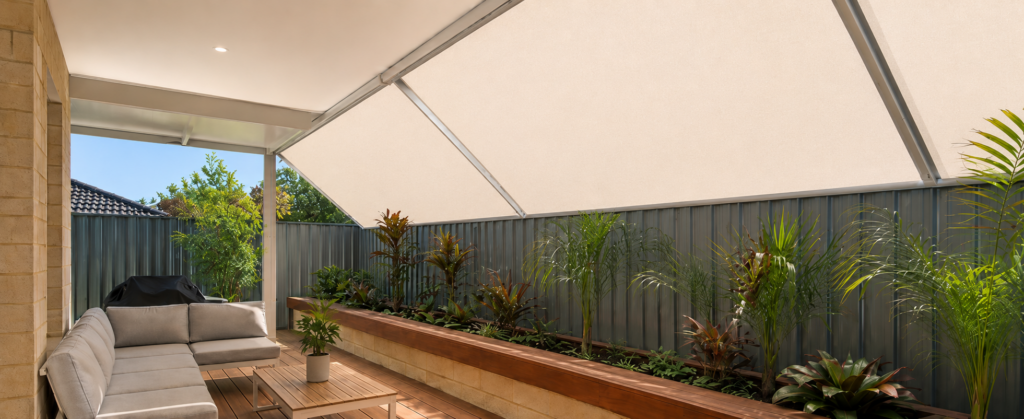
Roof to fence blind running from the roof line to the boundary fence

Your options for a roof-to-fence blind

For roof-to-fence runs we build on the SRS side-retention system or the budget option, then match the fabric, mesh or clear PVC, to how exposed the run is and how you want to use the space.

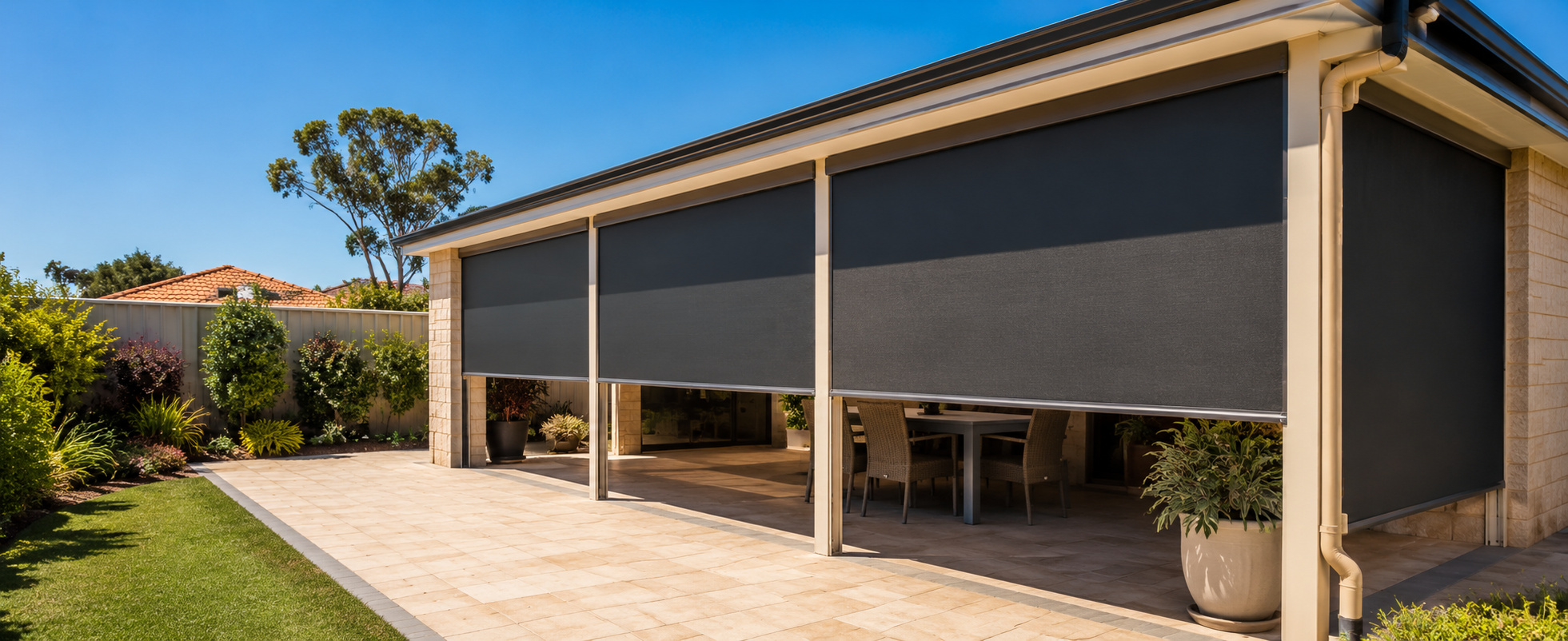
Roof-to-fence blinds enclosing the open side of a Perth patio down to the garden

SRS side-retention blinds

Our go-to system for roof-to-fence. The blind edges run in side channels that hold firm when the wind gets up, and it can be manual or motorised. See our SRS blinds.

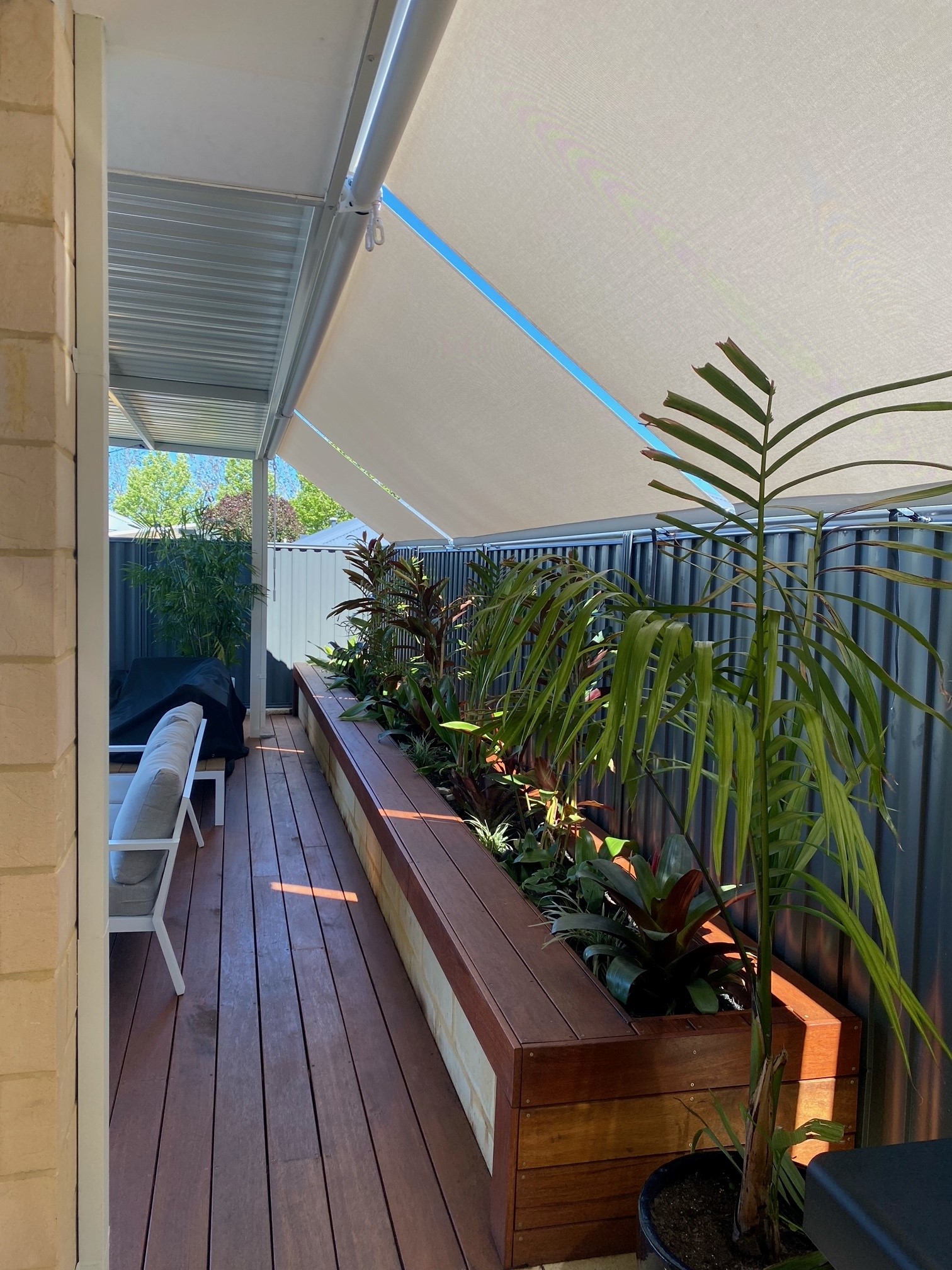
Budget roof-to-fence cafe blind closing in a narrow side patio

Budget roof-to-fence blinds

A cost-effective option that is pulled down by hand and clips onto the fence. Manual only, and ideal for a more sheltered run. See our budget blinds range.

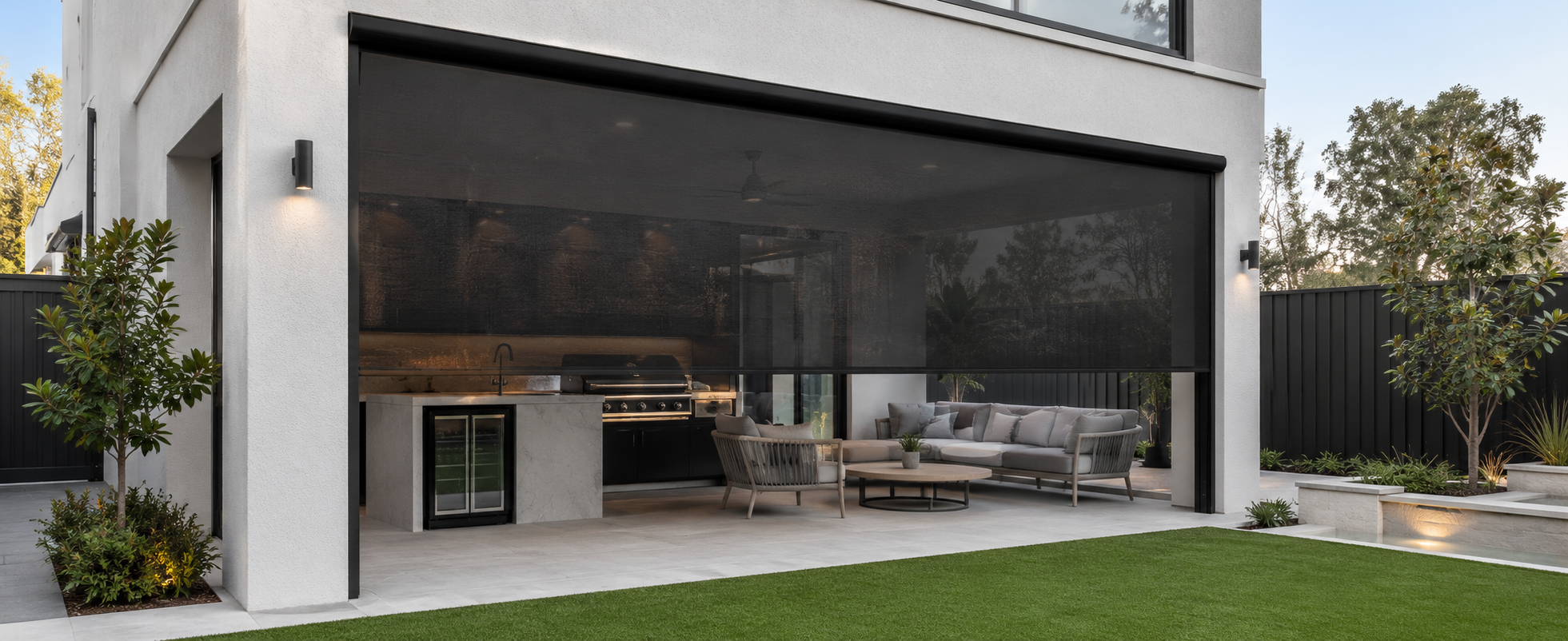
Vistaweave mesh roof-to-fence blind on a modern Perth home

Vistaweave mesh

Shade, glare and UV control with airflow and a see-out view. Explore Vistaweave mesh.

Outdoor blinds multiple blinds - outdoor blinds Perth

Clear PVC

A fully clear blind for a sealed, year-round room with the view left wide open. Ask us about clear PVC roof-to-fence blinds.

Mesh or clear PVC? Your first real decision

Almost every roof-to-fence project comes down to one early choice: a knitted mesh fabric, or clear PVC. Plenty of Perth homes use both, mesh on the western, breezy side, and clear PVC where they want a genuinely sealed, year-round room. There is no single right answer, only the right answer for that aspect and how you use the space.

Mesh (shade fabric)

  • Reduces glare and cuts a large share of UV
  • Lets air move through
  • Daytime privacy while you still see out
  • The natural choice for a hot, breezy side
  • Will not fully seal against driving rain

Clear PVC

  • Gives a full weather seal
  • Holds winter warmth in
  • Keeps the view completely open
  • Turns the space into a year-round room
  • Can feel warm on a hot day without airflow

Side-retention tracks are close to essential in Perth

On any wind-exposed run, a side-retention system like our SRS holds both edges of the blind in side channels so the Fremantle Doctor cannot lift or peel it away. A flat sheet hanging in that breeze will flog around and wear out early, so the guided-edge system is the part to get right first.

Manual or motorised?

Manual blinds are dependable and cost-effective, and perfectly sensible for one or two drops at a comfortable height. Our budget roof-to-fence option is manual only. It is pulled down by hand and clips onto the fence, which keeps the cost down on a more sheltered run. The SRS system, on the other hand, can be motorised, which earns its keep when you have several drops, a high roof line, or spans that are awkward to reach, and it can be paired with sun or wind sensors so the blinds look after themselves. The honest rule of thumb is simple: the more drops and the higher the roof, the stronger the case for a motorised SRS blind.

The detail most people miss: the bottom fixing

Here is where roof-to-fence blinds are genuinely different from a standard cafe blind, and where a cheap job shows itself within a season.

Fences are rarely level. Ground slopes. Patio roofs are sometimes raked. A blind that looks perfect along the top can leave an ugly, draughty gap along the bottom if the fence line steps up and down. A good installer measures and builds for that, with stepped or angled blinds where needed, rather than hanging a rectangle and hoping.

Two things make the difference. First, a side-retention system like SRS guides both edges of the blind in side channels so the wind cannot lift or peel it away. In our climate that is close to essential on any exposed run. Second, the bottom needs a deliberate plan, whether that is resting neatly on the fence capping, channelling into the fence, clipping onto the fence on a budget blind, or a weighted bottom rail to the ground. Sorting that out at measure stage is what separates a blind that seals from one that merely hangs.

Wind ratings are not fine print

Because these blinds present a large face to the breeze, the combination of fabric weight, guided-edge system and fixings has to suit your level of exposure. Reputable blinds are given a wind rating, and the simple discipline of retracting them in a genuine storm protects both the blind and your warranty. Operating an outdoor blind in winds beyond its rated class is one of the most common reasons a warranty claim is knocked back, so it is worth knowing the number for your blinds and respecting it.

Book your free measure & quote

Tell us about your roof line and fence, and we will measure on-site, recommend the right system and fabric, and give you a straight, fixed quote. No obligation, right across Perth.

"*" indicates required fields

Do you need council approval?

In most cases, fitting blinds to an existing, already-approved patio or verandah is a straightforward upgrade that does not trigger a separate approval, because you are not changing the structure. That said, enclosing a large area, working close to a boundary, or anything that edges toward a permanent enclosure can be treated differently by your local council. If you are in any doubt, a quick call to your shire before you order is five minutes well spent, and we are happy to point you in the right direction based on what you are trying to achieve.

What actually drives the price

There is no honest flat rate for roof-to-fence blinds, because every span is different. The things that move the price are the total size and number of separate drops, mesh versus PVC, manual versus motorised, whether you choose SRS or the budget option, how high and how accessible the roof line is, and whether the fence line needs custom angles or steps. The most useful number is not a figure off the internet, it is a measured quote for your actual space.

  • Measured on-site, never quoted blind over the phone.
  • Side-retention (SRS) edges on any wind-exposed run.
  • Fabric matched to the aspect: mesh for sun and breeze, PVC for a sealed, year-round room.
  • A clear plan for the bottom fixing along an uneven fence.
  • A wind rating that suits your exposure, and a habit of retracting in storms.
  • A written warranty, and a clear understanding of the simple maintenance that keeps it valid.

Looking after them so they last

Roof-to-fence blinds are low maintenance, not no maintenance, and a little care goes a long way in our climate.

  • Give the fabric and tracks a gentle wash with mild soapy water now and then, more often if you are near the coast, to stop salt and grime building up on the hardware.
  • Never leave blinds down in strong wind. Retract them when a storm is on the way.
  • Clean clear PVC softly. Avoid harsh scrubbing or solvents that can scratch or cloud it.
  • Keep the tracks clear of leaves and debris so the blinds run smoothly.

Frequently asked questions

What blinds are best for roof-to-fence in Perth?

For an exposed run, the SRS side-retention system is our go-to, because it guides both edges of the blind in side channels and holds firm in the Fremantle Doctor. For a more sheltered run or a tighter budget, the budget option is pulled down by hand and clips onto the fence. We match the choice to your site when we measure.

Do roof-to-fence blinds only work on a patio?

No. As well as fixing to a patio, verandah or pergola, we can fix the blind to your house roof line or eaves and run it straight down to the boundary fence, so you do not need an existing patio structure.

Can roof-to-fence blinds be see-through?

Yes. Clear PVC keeps the view completely open, and even mesh lets you see out while giving you privacy and cutting glare from the outside in.

Will they keep the rain out completely?

Clear PVC running in side channels gives you the best seal and will keep all but the most extreme driving rain out. Mesh reduces wind-blown rain and spray but is designed to breathe, so it will not fully seal a space.

How long will they last in Perth’s climate?

With the right fabric and hardware for your location and a simple cleaning routine, roof-to-fence blinds last for many years. Coastal homes simply need to be a little more regular with cleaning to keep salt off the moving parts.


Get the gap closed properly

We have installed plenty of tricky roof-to-fence runs along stepped and raked fence lines across Perth for more than 20 years. Book a free measure and quote and we will tell you what will actually work.

One Stop Outdoor Blinds has been measuring and installing outdoor blinds across Perth for more than 20 years, including plenty of roof-to-fence runs on stepped and raked fence lines. We supply and fit SRS, Vistaweave and budget systems, all custom-made for your space.

Secret Link